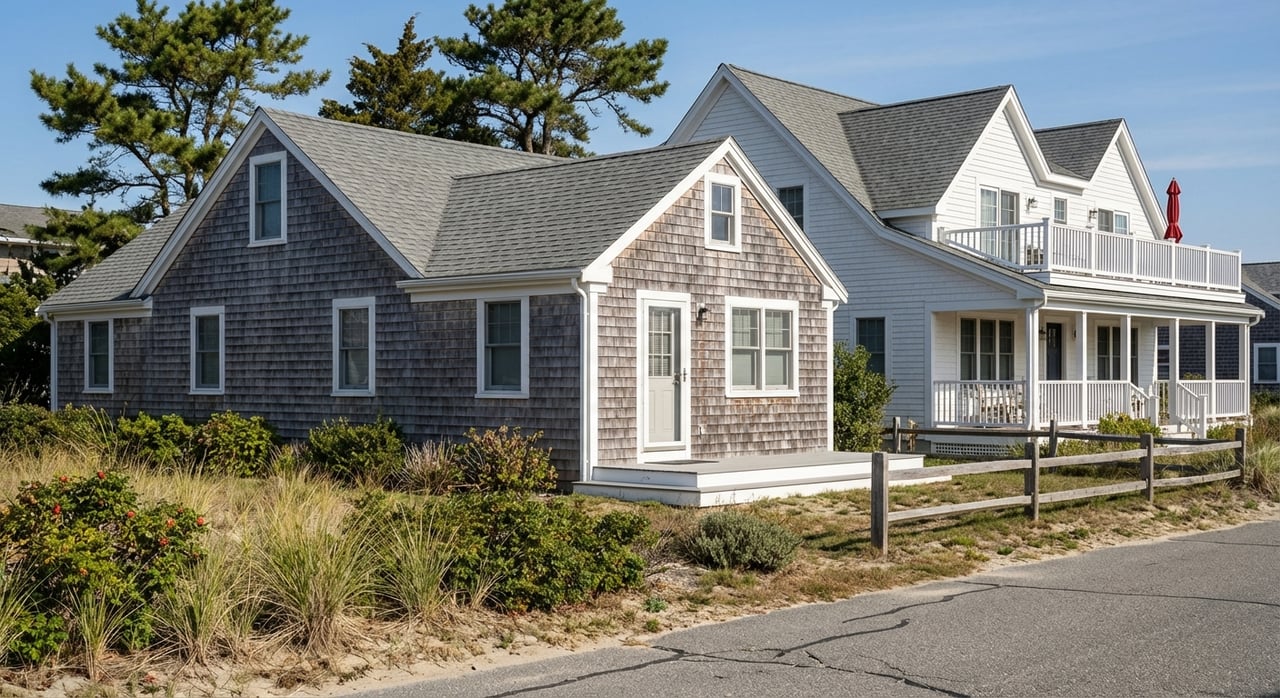
Torn between Cape Elizabeth and Scarborough for your next home near Portland? You are not alone. Both towns offer strong schools, beautiful coastline, and quick access to the city, but the day-to-day feel and price points are different. In this guide, you will learn how the two communities compare on budget, schools, beaches, commute, and taxes so you can choose with confidence. Let’s dive in.
Quick snapshot: Cape Elizabeth vs. Scarborough
- Prices and value: Cape Elizabeth skews higher. Redfin’s Jan 2026 median sale price was about $842,500 in Cape Elizabeth vs. about $725,000 in Scarborough (Redfin, Jan 2026). Zillow’s Scarborough ZHVI was near $664,000 in Jan 2026. Realtor.com showed a higher listing median for Cape Elizabeth’s 04107 zip as of Dec 2025. Small monthly sales counts and different methods can shift these numbers, so always note the source and date.
- Schools: Cape Elizabeth Public Schools is a small district with roughly 1,500 students. Scarborough Public Schools is larger with around 2,900 students and more elementary options. See district details from NCES for Cape Elizabeth and NCES for Scarborough.
- Commute: Average travel time to work runs about 21.4 minutes in Cape Elizabeth and 18.4 minutes in Scarborough, according to U.S. Census QuickFacts and Scarborough QuickFacts. Your exact route matters more than the townwide average.
- Taxes: Recent town rates were similar but not identical. Cape Elizabeth reported about $11.00 per $1,000 for FY25, while Scarborough showed about $11.33 for FY26. You can see regional comparisons through SEDCO’s tax summary.
- Beaches: Cape Elizabeth leans scenic and park-based (Portland Head Light, Fort Williams, Crescent Beach, Two Lights). Scarborough leans sandy, swimmer-friendly beaches (Scarborough Beach State Park, Higgins Beach, Pine Point) with resident pass programs.
Neighborhood feel and lifestyle
Cape Elizabeth highlights
Cape Elizabeth feels intimate and coastal from end to end. You get headlands, lighthouses, and preserved green space that frame everyday life. Fort Williams Park and Portland Head Light anchor the town’s identity, while Crescent Beach State Park, Kettle Cove, and Two Lights State Park offer trails, picnic areas, and classic ocean vistas. For a sense of amenities and conditions, explore the state park information on Maine DACF’s site.
The housing stock leans single-family with a higher share of owner-occupied homes and established neighborhoods. The town has also been studying policy ideas to broaden housing types. You can track materials on the Cape Elizabeth Reports page.
Town Center gives you daily conveniences, and many streets feel quiet and residential. Expect fewer listings at any given time, which can make the search more competitive.
Scarborough highlights
Scarborough is larger and more varied. You will find several beach neighborhoods along the coast and more inland options near Haigis Parkway and Exit 42. Pine Point and Ferry Beach bring a boardwalk feel, seafood shacks, and broad sandy stretches. Higgins Beach draws a close-knit surf community and a calm, walkable vibe.
The town manages seasonal passes, meters, and parking rules, which help keep access orderly in peak months. For details, check the Scarborough beaches and pass information. Inland, you will see newer subdivisions, condos, and traditional single-family streets. The larger scale also means more retail and services without leaving town.
Schools and programs
If schools are a top priority, start by comparing size and structure. Cape Elizabeth Public Schools operates three schools serving roughly 1,500 students, according to NCES. Families often cite strong academic outcomes and a close-knit school community as reasons to choose Cape.
Scarborough Public Schools is larger, with about 2,900 students across six schools per NCES. The district offers multiple elementary schools and solid graduation outcomes, which can be appealing if you prefer a bigger system with more capacity and varied attendance areas.
For private options, you are close to Portland’s independent schools such as Waynflete and Cheverus. Whatever your preference, plan to:
- Visit the schools and talk through programs and class sizes.
- Confirm attendance boundaries for any specific property.
- Ask about open enrollment policies, after-school activities, and special programs.
Housing, budget, and inventory
Cape Elizabeth usually carries a higher per-square-foot price and fewer active listings at any given time. Scarborough typically offers broader price bands, including condos and larger subdivisions inland from the beach. As a rough guide drawn from recent snapshots, Cape Elizabeth’s median sale price was about $842,500 in Jan 2026 (Redfin), while Scarborough’s was about $725,000 in the same period (Redfin). Zillow’s Scarborough ZHVI hovered near $664,000 in Jan 2026. Listing medians and modeled indexes can diverge from sale medians. Seasonal waterfront and luxury listings can also push monthly numbers around.
A quick budget framing:
- Under about $600,000 to $750,000: You will generally see more choices in Scarborough, especially inland neighborhoods and select condo communities.
- Above about $800,000 to $1 million and up: Cape Elizabeth becomes more accessible, but selection is often limited and competition can be strong.
Do not stop at the purchase price. Put monthly ownership costs on paper:
- Property taxes: Cape Elizabeth’s FY25 rate was about $11.00 per $1,000. Scarborough’s FY26 rate was about $11.33 per $1,000. See regional context via SEDCO’s tax page.
- Insurance: Coastal proximity can affect premiums. Check wind, storm, and flood exposure with your insurer.
- Utilities and HOA/condo fees: Add these to your monthly estimate.
Cape Elizabeth has been reviewing housing diversity at the town level, which is worth monitoring if you care about future inventory and options. Town materials are posted on the Cape Elizabeth Reports page.
Commute and everyday access
Both towns sit just south of Portland, with similar townwide commute averages. Per U.S. Census QuickFacts, Cape Elizabeth’s mean travel time to work is about 21.4 minutes, while Scarborough’s average is about 18.4 minutes. Scarborough provides faster access to I-95 and the Jetport. Cape Elizabeth offers quick surface-street routes into South Portland and downtown.
Transit is evolving. Greater Portland METRO has been expanding service into Scarborough, which may change options for certain corridors over time. See local reporting on the new route from the Portland Press Herald’s coverage of METRO expansion to Scarborough.
Weekends look a bit different. In Cape Elizabeth, you will often plan around state park parking and scenic lookouts. In Scarborough, resident passes and meters shape how you use beaches in peak season, which can be a plus if you like easy sandy beach days and clear parking rules.
Who should lean Cape Elizabeth vs. Scarborough
Choose Cape Elizabeth if you:
- Want a small coastal town feel with landmark parks and headland views.
- Prefer a smaller, highly regarded public school district.
- Have a budget that is comfortable above the upper six figures and are okay with fewer active listings.
- Value a higher share of owner-occupied neighborhoods and a quieter residential pattern.
Choose Scarborough if you:
- Want more housing variety across several price bands, including condos and newer subdivisions.
- Prefer sandy, swimmer-friendly beaches and do not mind resident pass systems.
- Value quick highway access, a shorter average commute, and more in-town shopping and services.
- Need a larger public school district with multiple elementary options.
How to decide: a simple checklist
- Rank your priorities: schools, commute, beach style, lot size, and budget ceiling.
- Visit schools: schedule tours and confirm attendance boundaries for each property you like.
- Test the commute: drive your likely route during your typical start and end times.
- Check beach access: review resident passes, parking rules, and seasonal patterns. Start with Scarborough’s beach page and Maine DACF’s park info.
- Model monthly costs: property taxes, insurance, utilities, and any HOA or condo fees. Use SEDCO’s tax comparisons for context.
- Understand town trends: scan Cape Elizabeth’s policy documents for housing and planning updates on the town’s Reports page.
Ready to compare specific neighborhoods and active listings that match your must-haves? Reach out to Veronica Schneider for a focused, local plan that fits your budget, timeline, and lifestyle.
FAQs
What is the main price difference between Cape Elizabeth and Scarborough?
- Recent snapshots showed Cape Elizabeth’s median sale price around $842,500 vs. about $725,000 in Scarborough (Redfin, Jan 2026), with Scarborough’s Zillow ZHVI near $664,000 in Jan 2026.
How do Cape Elizabeth and Scarborough public schools compare?
- Cape Elizabeth is a smaller district of roughly 1,500 students, while Scarborough serves around 2,900; see official counts at NCES for Cape and NCES for Scarborough.
Which town has easier beach access for families?
- Scarborough offers large sandy beaches with resident passes and meters that organize peak-season access, while Cape Elizabeth centers on state parks and scenic headlands; review Scarborough beach info and Maine park details.
What are typical commute times to Portland from each town?
- Townwide averages show about 21.4 minutes from Cape Elizabeth and about 18.4 minutes from Scarborough, according to U.S. Census QuickFacts for Cape and Scarborough.
Are property tax rates similar in Cape Elizabeth and Scarborough?
- Yes, they are close, with Cape Elizabeth around $11.00 per $1,000 (FY25) and Scarborough around $11.33 (FY26); check regional comparisons on SEDCO’s tax page.