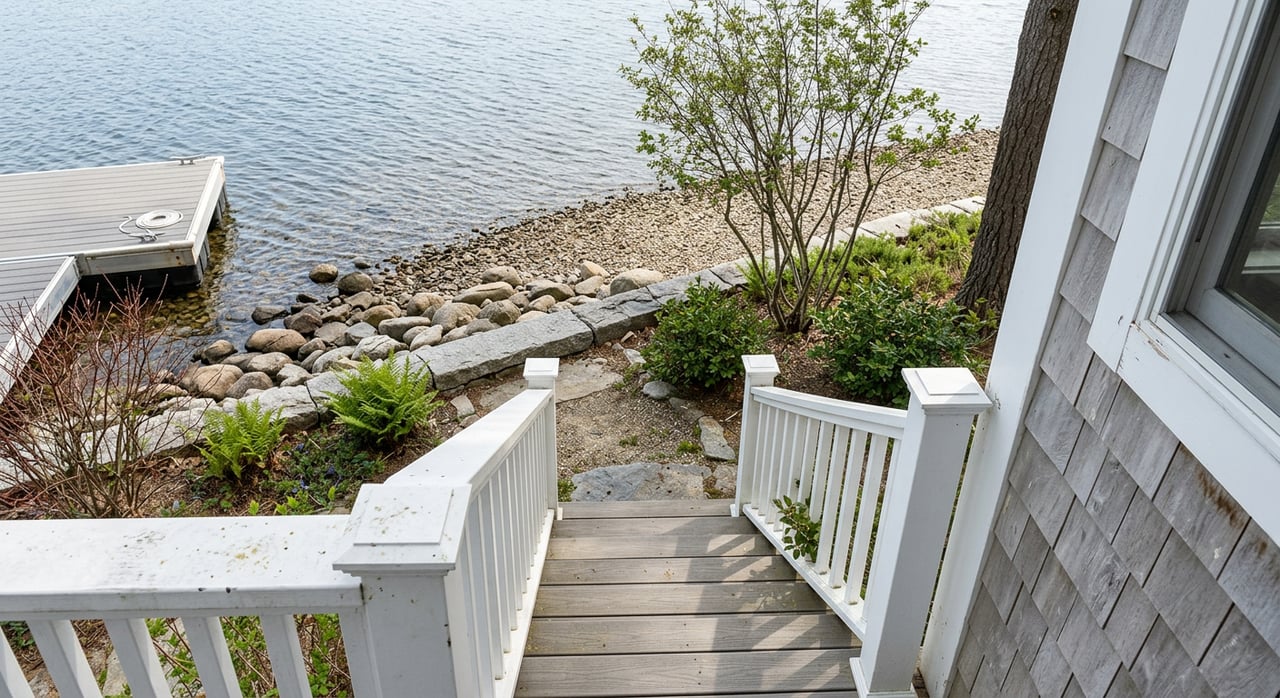
Thinking about a Sebago Lake home in Standish? Before you picture coffee on the dock and sunset cruises, get clear on the shoreland rules that shape what you can build, expand, or remove. These protections keep the lake clean and your investment secure, but they also set firm limits that can affect value and plans. In this guide, you’ll learn the key setbacks, expansion caps, septic and dock rules, and the due diligence steps that save time and stress. Let’s dive in.
How shoreland rules work in Standish
State framework in Maine
Maine’s Shoreland Zoning program sets the baseline rules that towns must meet or exceed. The shoreland area generally extends 250 feet from the normal high-water line of great ponds and rivers, and 75 feet for certain streams. To understand the statewide foundation, review the Maine DEP Shoreland Zoning program.
Standish’s local ordinance
Standish implements the state program through Chapter 237, which controls day-to-day permitting for Sebago Lake lots. The ordinance identifies districts, setbacks, expansion and height limits, vegetation standards, docks, and nonconforming structure rules. For Sebago specifically, Standish provides a practical benchmark for the lake’s normal high-water line at 266.5 feet MSL. You can read the operative rules in Standish Chapter 237: Shoreland Zoning.
PWD oversight on Sebago Lake
Sebago Lake supplies drinking water to Greater Portland, so the Portland Water District (PWD) adds extra protections. If you plan to install or replace a septic system within 200 feet of the lake, you need a separate PWD septic system permit in addition to town and state approvals. Involve PWD early if your plans include septic, near-shore excavation, or shoreline work.
Key limits that shape your plans
Setbacks, expansions, and height
- New principal structures on a great pond like Sebago must be set back 100 feet from the normal high-water line. Other waterbodies are typically 75 feet.
- If an existing structure sits close to the water, expansion is tightly capped. Within 75 feet, the combined footprint of all structures cannot exceed 1,000 sq ft (or 30 percent above the footprint as of 1/1/1989, whichever is greater). Within 100 feet of a great pond, the cap is 1,500 sq ft (or 30 percent above 1/1/1989).
- Height is also limited near the shore. Expect a 20-foot cap within 75 feet and generally 25 feet within 100 feet of a great pond. See the local ordinance for specifics on how these limits apply to your structure.
Lot coverage inside the zone
Inside the shoreland zone, Standish limits the total footprint of structures, parking, and other non-vegetated surfaces to 20 percent of the portion of the lot that lies within the zone. This can affect plans for garages, paved drives, and patios.
Vegetation and buffer rules
Expect strict protection of the vegetated buffer near the lake. In many districts along great ponds, the first 100 feet must keep a well-distributed stand of vegetation, and within that strip you generally cannot create a cleared opening larger than 250 sq ft without meeting replanting and permit standards. Review the vegetation rules in Standish’s ordinance before removing trees or undergrowth for views.
Docks, piers, and boathouses
Most lots are limited to a single residential dock, and towns favor temporary, minimal structures. State guidance suggests non-commercial temporary docks on non-tidal waters should generally not exceed six feet in width. New permanent docks or piers on non-tidal waters typically require a DEP NRPA permit and local shoreland approval, and you will need to show why a temporary dock is not feasible. See the state guideline language on piers and docks standards.
Shoreline stabilization and erosion work
Hard armoring like riprap or seawalls is closely regulated, and softer solutions are preferred where feasible. Many projects within 75 to 100 feet of the water need a DEP NRPA permit, and access methods can be regulated too. For an overview of how Maine treats shoreline stabilization, see the shoreline stabilization standards.
Septic systems and bedrooms
Adding bedrooms or converting a seasonal camp to year-round use hinges on septic capacity. A Licensed Site Evaluator must design or verify the system using the HHE-200 process outlined by the state. On Sebago Lake, new or replacement systems within 200 feet also require a PWD septic permit. Learn how septic design and records work through Maine DHHS resources on the HHE-200 and subsurface wastewater.
Stormwater and large projects
Large expansions, significant site work, or added impervious area can trigger state stormwater review in addition to town permits. Standish refers to the State Stormwater Management law, and thresholds vary by watershed risk and disturbed area. Start with the local framework in Chapter 237 to understand when higher-level permits may apply.
Federal permits for in-water work
Projects involving dredging, fill, or structures in federally regulated waters can require authorization from the U.S. Army Corps of Engineers. If your plans include dredging a channel or substantial in-water work, review the Corps’ permitting overview and ask the town or DEP whether federal notice is needed.
Buyer due diligence checklist
- Request the full municipal file: shoreland permits, Planning Board approvals, building permits, DEP NRPA permits, and the septic HHE-200 design and records. If anything is missing, plan on reapplying.
- Confirm the shoreland district on Standish’s Official Shoreland Zoning Map and whether Resource Protection applies, which can add a 250-foot setback and stricter limits.
- Verify whether the home is legally nonconforming and what expansions have already been used. Prior approvals can affect your baseline for future changes.
- Order a boundary and shoreline survey that marks the normal high-water line. For Sebago Lake, Standish recognizes 266.5 feet MSL as a practical reference point.
- Evaluate septic feasibility. If no HHE-200 exists, hire a Licensed Site Evaluator. If the lot cannot support a compliant replacement system, adding bedrooms or converting to year-round use may be limited.
- Check dock status. Confirm any existing dock has municipal and, if applicable, DEP approvals. If none exist, expect the town and DEP to prefer temporary, minimal designs.
- Plan vegetation changes carefully. Clearing for views can trigger replanting and buffer compliance; openings larger than 250 sq ft in protected strips are restricted.
- Inspect for shoreline erosion. If you need stabilization, anticipate design constraints, potential DEP NRPA review, and mitigation plantings.
Smart next steps in Standish
- Ask the seller for town shoreland permits, DEP NRPA permits, and the septic HHE-200 design and pumping records.
- Hire a surveyor to map boundaries and the high-water line, and a Licensed Site Evaluator to confirm septic capacity for your goals.
- Speak with Standish’s Code Enforcement or Planning staff about your preliminary plans, and contact PWD early for any septic or near-shore work within 200 feet of the lake.
- If you plan structural work, budget time for Planning Board review, DEP NRPA permitting where required, and possible stormwater review. Expect buffer plantings and certified erosion control practices.
- Consider lake-friendly landscaping. PWD’s Lakescaping program offers technical help and small grants to restore buffers and manage runoff.
Buying on Sebago Lake is about matching lifestyle with stewardship and smart planning. If you want a clear path from offer to enjoyment, let a local advisor help you line up the right surveys, permits, and timelines. To talk through a specific property or plan, schedule a consultation with Veronica Schneider.
FAQs
What is the shoreland zone for Sebago Lake in Standish?
- The shoreland zone generally extends 250 feet from the normal high-water line of great ponds like Sebago; Standish uses 266.5 feet MSL as a practical elevation reference for that line.
How close can I build to the water on Sebago Lake?
- New principal structures must be set back 100 feet from the lake; expansions to older homes closer than that face strict footprint and height limits under Standish’s ordinance.
Do I need a special septic permit near Sebago Lake?
- Yes, if your new or replacement system is within 200 feet of the lake, you need a separate Portland Water District septic permit in addition to town and state approvals.
Can I install a permanent dock on Sebago Lake?
- Permanent docks on non-tidal waters usually require a DEP NRPA permit and local approval, and towns prefer temporary docks where feasible, with typical width guidance of about six feet for non-commercial use.
How much vegetation can I clear for a view?
- Within protected buffer strips near the lake, openings larger than 250 sq ft are restricted, and replanting is often required. Always review Standish’s vegetation standards before clearing.
What if I want to add bedrooms to a lakefront camp?
- Bedroom additions depend on septic capacity confirmed by an HHE-200 design. If the lot cannot support a compliant system, expansions may be limited or require alternative designs.